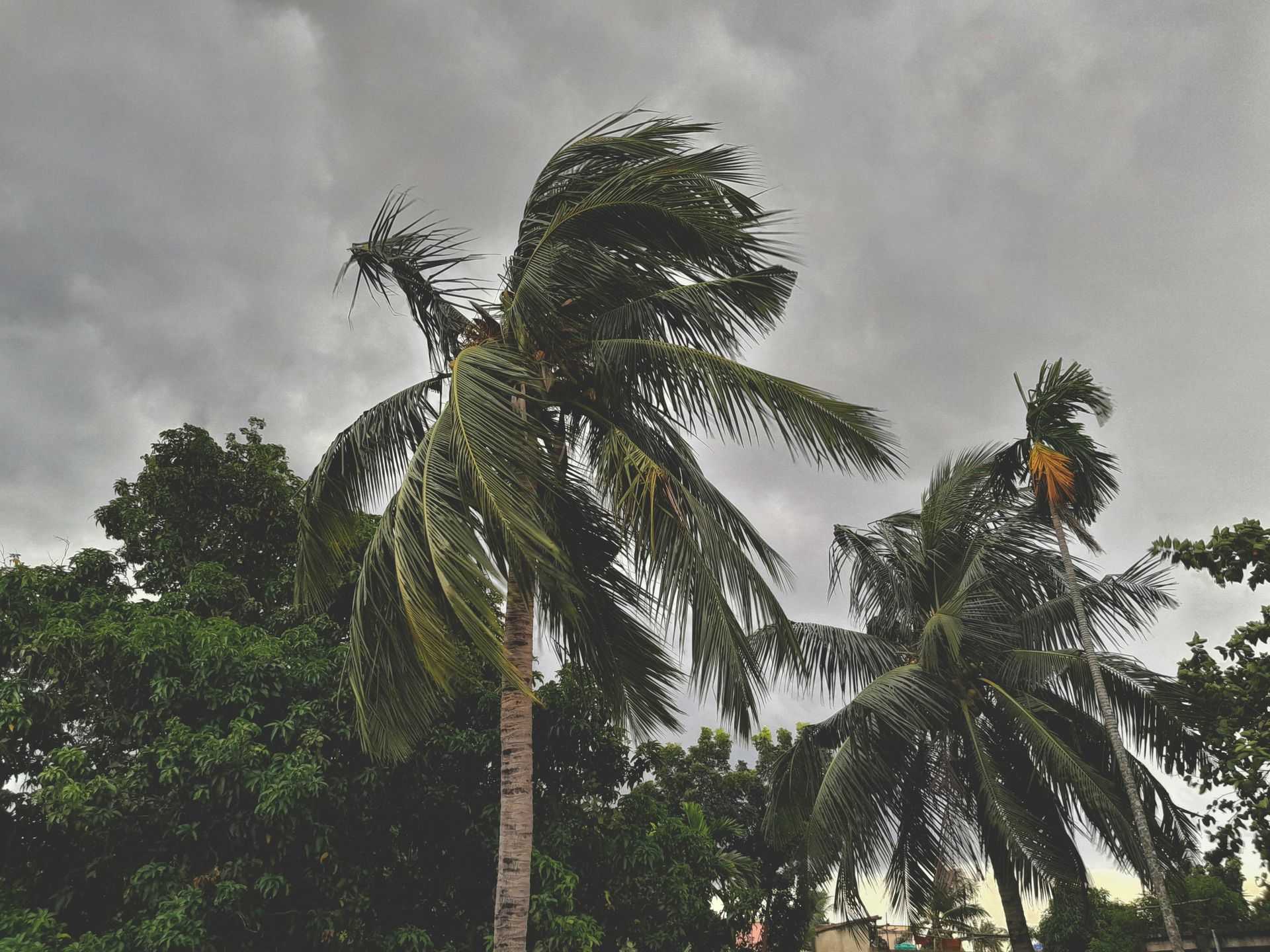
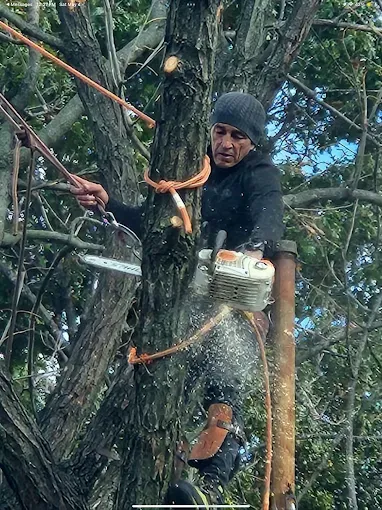
Storms are one of the leading causes of tree failure across New Jersey and New York. High winds, heavy rain, snow, and saturated soil can weaken even healthy-looking trees, turning them into serious hazards within hours. After a storm passes, many property owners assume the danger is over—but in reality, the risk may just be beginning.
Trees often sustain hidden damage that is not immediately obvious. A tree that remains standing after a storm can still be unstable, structurally compromised, or at risk of falling days or even weeks later. Knowing how to recognize the warning signs of a dangerous tree after a storm is critical for protecting your home, your family, and anyone who passes through your property.
This guide explains the most common post-storm tree hazards, what to look for, and when professional intervention is necessary.
Why Storm-Damaged Trees Are Especially Dangerous
Storm damage weakens trees in ways that are not always visible from the outside. Wind can twist trunks, break internal fibers, and loosen root systems. Heavy rain can oversaturate soil, reducing the tree’s ability to stay anchored. Snow and ice add weight to branches, increasing the likelihood of breakage.
In urban and suburban areas like Jersey City, Hoboken, Bergen County, Staten Island, and Brooklyn, trees are often close to homes, sidewalks, vehicles, and utility lines. This means even a partial failure—such as a large limb falling—can cause significant damage or injury.
Post-storm inspections are essential because damaged trees rarely heal themselves without intervention.
Leaning Trees After a Storm
One of the most obvious signs of a dangerous tree is sudden leaning. While some trees naturally grow at an angle, a noticeable change in position after a storm is a major red flag.
A tree that leans more than fifteen degrees or appears to be shifting at the base may have experienced root failure. Saturated soil can cause roots to lose their grip, making the tree prone to tipping over entirely.
Pay close attention to:
- Trees that were upright before the storm but are now leaning
- Soil that appears cracked or raised on one side of the trunk
- Trees leaning toward homes, fences, driveways, or streets
Leaning trees often require immediate professional evaluation and, in many cases, emergency removal.
Cracks or Splits in the Trunk
Storm winds place enormous stress on tree trunks. If a trunk develops cracks, splits, or seams, the structural integrity of the tree may be compromised.
Vertical cracks running along the trunk are especially concerning, as they can indicate internal failure. Splits at branch junctions or where large limbs meet the trunk also weaken the tree’s ability to support its own weight.
Trees with visible trunk damage are at higher risk of sudden collapse during the next storm—or even on a calm day.
Broken, Hanging, or Detached Limbs
One of the most dangerous post-storm conditions is hanging branches. These limbs may appear stable but can fall without warning.
Signs to watch for include:
- Large limbs lodged in other branches
- Broken branches resting on roofs or wires
- Cracked limbs still attached to the tree
- Branches hanging over walkways or driveways
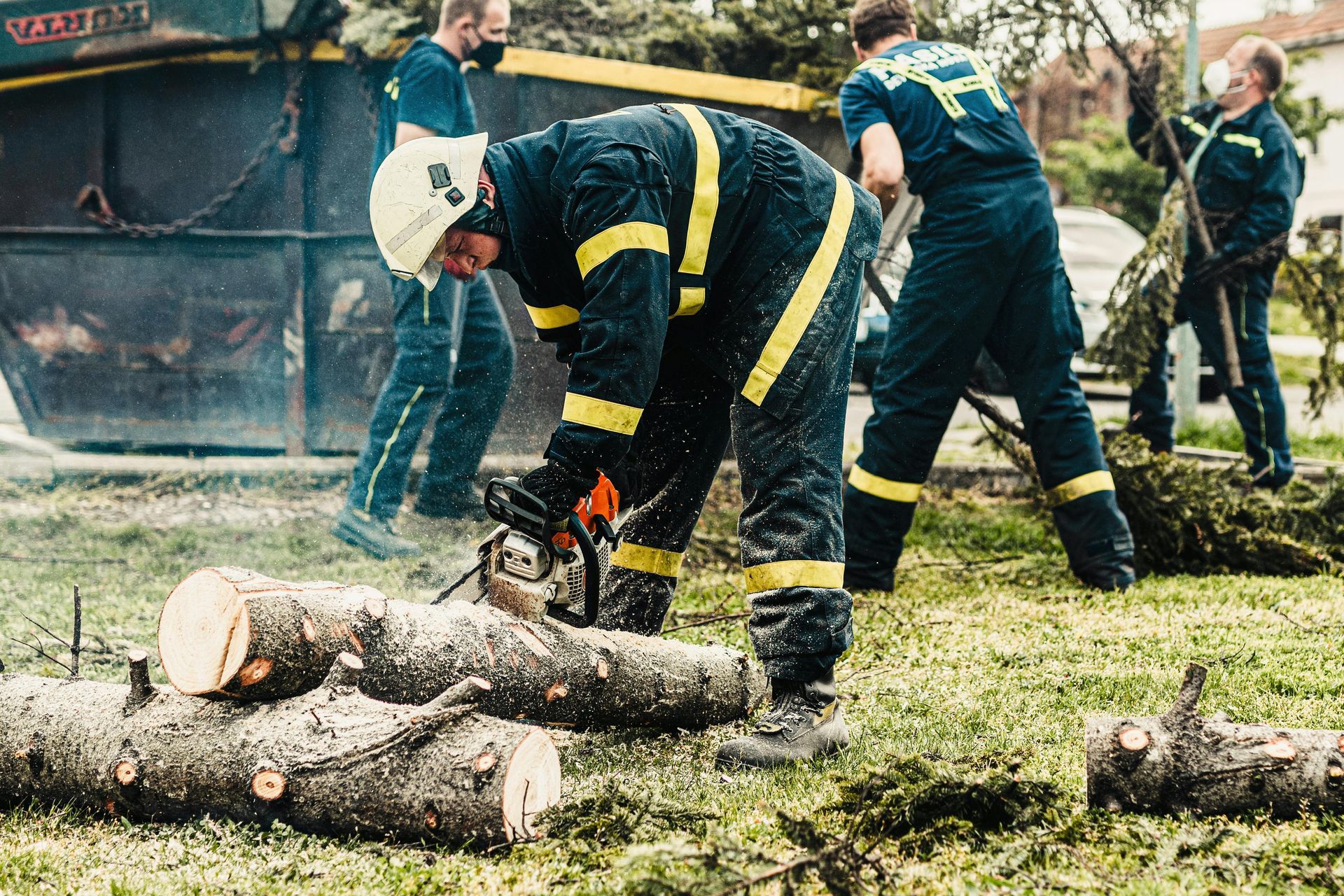
These hazards should never be handled by homeowners. Falling limbs cause serious injuries every year and often require professional rigging and removal.
Exposed or Uprooted Roots
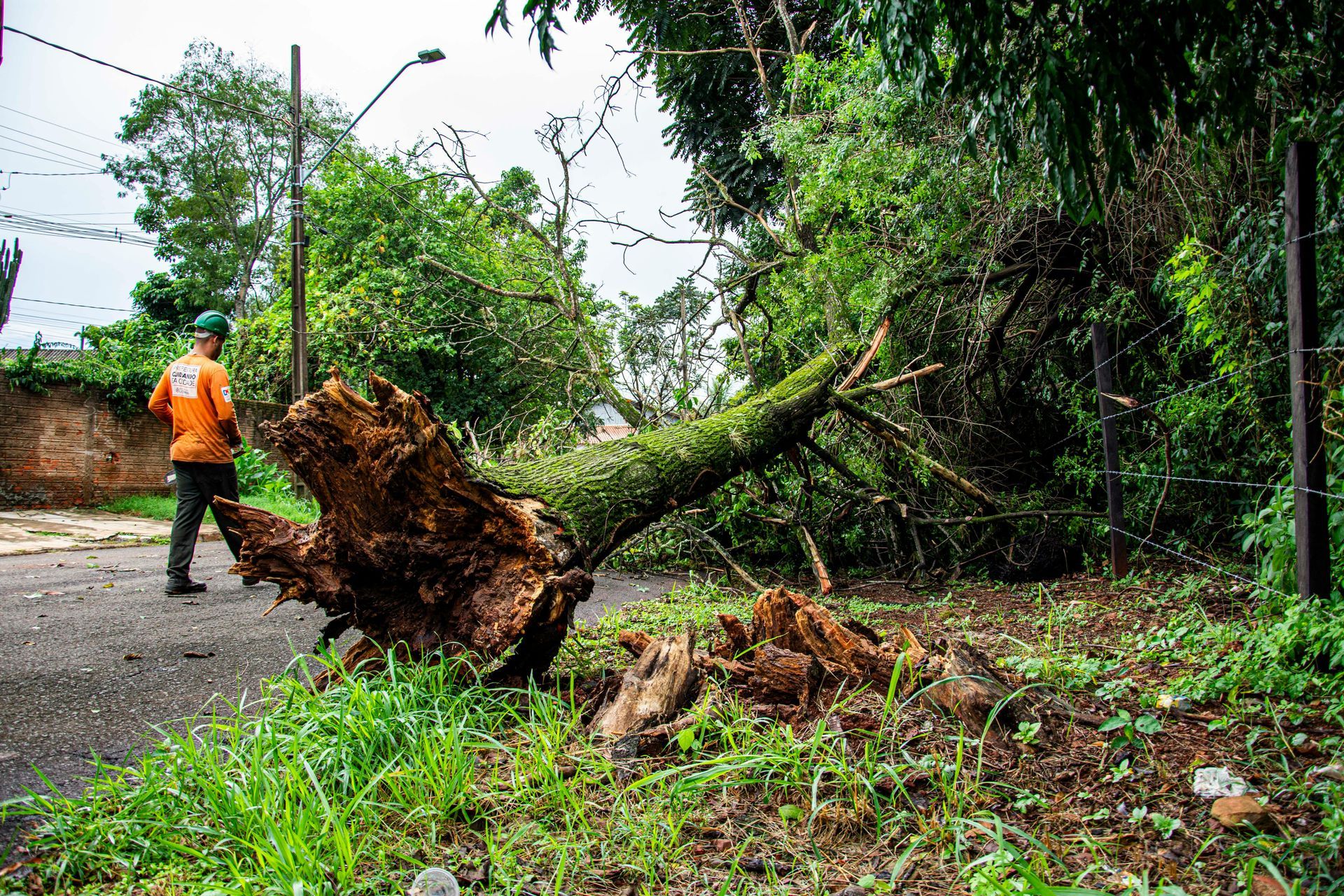
Root damage is a leading cause of tree failure after storms. Heavy rain can wash away soil, exposing roots or loosening the entire root ball.
Warning signs include:
- Roots visible above ground
- Soil lifting or separating from the trunk
- A gap forming between the tree base and the ground
- Trees that sway excessively in light wind
Once roots are compromised, a tree’s stability is significantly reduced. Root failure often leads to complete uprooting.
Loss of Large Sections of the Canopy
When a tree loses a major portion of its canopy during a storm, it may become unbalanced. This imbalance places uneven stress on the trunk and root system, increasing the chance of future failure.
Trees that have lost large limbs may also:
- Develop decay at break points
- Become vulnerable to pests and disease
- Experience structural weakness over time
In many cases, severely unbalanced trees need corrective pruning or removal to prevent further damage.
Signs of Internal Damage or Decay
Not all storm damage is visible from the outside. Internal damage may not show symptoms immediately but can worsen rapidly.
Indicators of internal problems include:
- Mushrooms or fungal growth at the base
- Soft or hollow-sounding trunk sections
- Oozing sap or dark stains
- Sudden leaf drop or discoloration
Storm stress can accelerate decay, especially in older or previously weakened trees.
Trees Near Power Lines or Structures
Trees that shift even slightly toward power lines after a storm pose an immediate danger. Electrical hazards are extremely serious and should never be handled without professional coordination.
If a tree or branch is touching or near power lines:
- Keep people and pets away
- Do not attempt to cut or move anything
- Contact a professional tree service immediately
The same applies to trees leaning toward homes, garages, or neighboring properties.
Delayed Tree Failure After Storms
One of the most misunderstood aspects of storm damage is delayed failure. Trees do not always fall immediately after a storm. Root damage, internal cracks, and structural stress can cause trees to fail days or weeks later, often without warning.
This is why post-storm inspections are critical even if no obvious damage is present.
When a Dangerous Tree Becomes an Emergency
You should seek immediate professional help if:
- A tree is leaning toward a structure
- Large limbs are hanging overhead
- Roots are visibly uprooted
- A tree is cracked or split
- Power lines are involved
- A tree is blocking access or roadways
In these situations, delaying action increases the risk of injury, property damage, and liability.
Why Professional Evaluation Matters
Homeowners often underestimate storm damage because trees can appear stable on the surface. Professional arborists are trained to assess structural integrity, root stability, and failure risk.
A professional assessment may recommend:
- Emergency removal
- Corrective pruning
- Tree bracing or support
- Ongoing monitoring
Early intervention can prevent costly emergencies later.
Insurance and Liability Considerations
If a dangerous tree causes damage or injury, property owners may be held liable—especially if warning signs were visible and ignored.
Insurance companies often look at whether reasonable care was taken to address known hazards. Documentation from a professional tree service can support claims and demonstrate responsible maintenance.
Protecting Your Property After a Storm
After any major storm:
- Walk your property cautiously
- Look for changes in tree position or structure
- Avoid standing under damaged trees
- Schedule a professional inspection if anything looks questionable
Being proactive protects your property and your peace of mind.
Storm Damage Tree Services in NJ and NY
Creative Tree Service provides storm damage inspections, emergency removals, and hazard mitigation throughout New Jersey and New York, including Hudson County, Bergen County, Passaic County, Manhattan, Staten Island, and Brooklyn.
If you suspect a tree on your property may be dangerous after a storm, professional evaluation is the safest next step.