
Building Walls That Hold Soil and Manage Slope
Retaining Walls in Jersey City for preventing erosion on sloped yards, supporting grade changes, and stabilizing drainage-prone properties
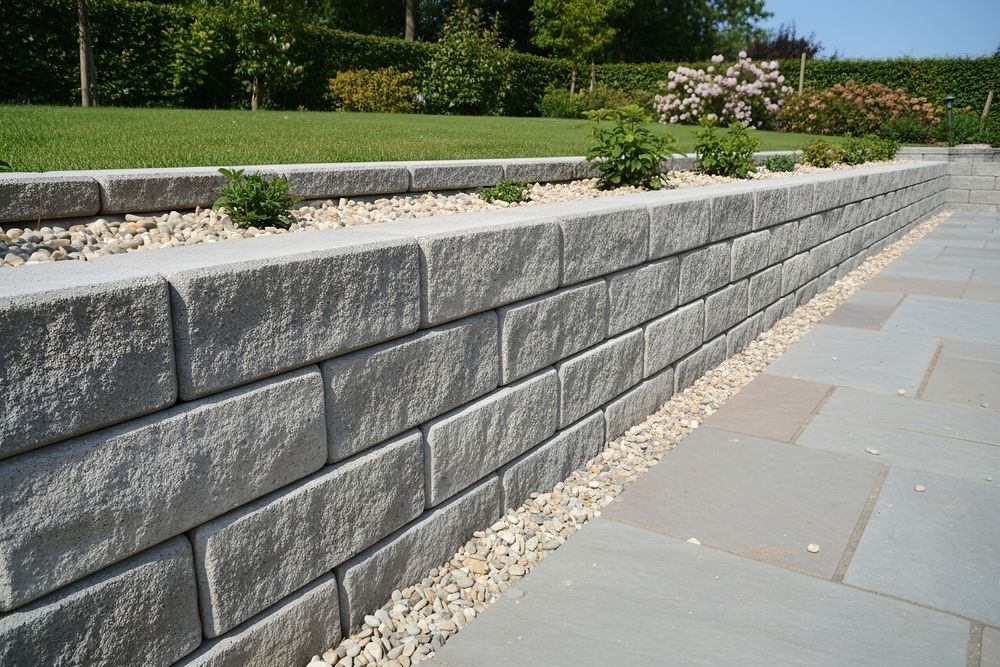
Creative Tree Service builds retaining walls on residential and commercial properties throughout Jersey City and surrounding areas when soil movement, drainage problems, or grade transitions require structural support. You need this service when a slope erodes after heavy rain, when you want to level a yard for usable space, or when water runs toward your foundation due to uncontrolled runoff. The work involves excavating the wall line, installing a stable base, and constructing a wall system that holds soil in place while allowing water to drain properly.
Retaining walls must resist constant pressure from the soil behind them. The design depends on wall height, soil type, and water table conditions. Shorter walls may use interlocking block or natural stone, while taller installations require engineered footings and drainage systems. Gravel backfill and perforated drain pipe prevent water from building up behind the wall, which would increase pressure and lead to failure over time.
If your property has slope issues or needs a grade transition, contact Creative Tree Service to assess the site and discuss wall design, materials, and drainage integration.
How Retaining Walls Are Built and What They Accomplish
You will see the crew excavate a trench along the planned wall line, compact a gravel base, and begin setting the first course of block or stone. Each row is checked for level and alignment, and some systems use pins or interlocking lips to tie courses together. Backfill is placed in layers and compacted as the wall rises, and drainage pipe is installed at the base to channel water away from the structure.
After installation, you will notice a stable, level surface above the wall where soil no longer slumps or washes away, improved water flow away from vulnerable areas, and a clear separation between grade levels. Creative Tree Service completes the wall with capstones or a finished top course and ensures that drainage outlets are clear and functional. The wall will hold its position as long as the base remains stable and water is managed correctly.
This service does not include landscaping, irrigation installation, or soil replacement above the wall unless specified. Walls over a certain height may require engineering certification and permits depending on local building codes. If your property has underground utilities, the crew will coordinate locates before excavation begins to avoid strikes.
Common Questions About Retaining Wall Installation
Answers to questions about building retaining walls in Jersey City and surrounding areas.
What causes a retaining wall to fail?
Poor drainage, inadequate base preparation, and hydrostatic pressure from trapped water are the most common causes. Walls built without backfill drainage or on unstable soil are especially vulnerable.
How tall can a retaining wall be built?
Wall height is limited by material strength, soil conditions, and local codes. Walls over four feet often require engineering review and reinforced construction methods.
When is a retaining wall necessary instead of regrading?
A wall is necessary when space is limited, when the slope is too steep to stabilize with grading alone, or when you need to create a level area without moving large amounts of soil.
Why is drainage so important in retaining wall design?
Water adds weight and pressure behind the wall. Without proper drainage, that pressure can crack, tilt, or collapse the structure over time.
What materials are used for retaining walls in this area?
Interlocking concrete block, natural stone, and poured concrete are common. Material choice depends on wall height, aesthetic preference, and budget.
When your property needs structural support to manage slope or prevent erosion, Creative Tree Service can design and install a retaining wall that holds soil and directs water safely. Call (201) 208-5811 to schedule a site visit and review your wall options.